Clinic Management System
Public Clinics Go Digital with RM 1 Billion: Is Your Private Clinic Still on Paper Files?
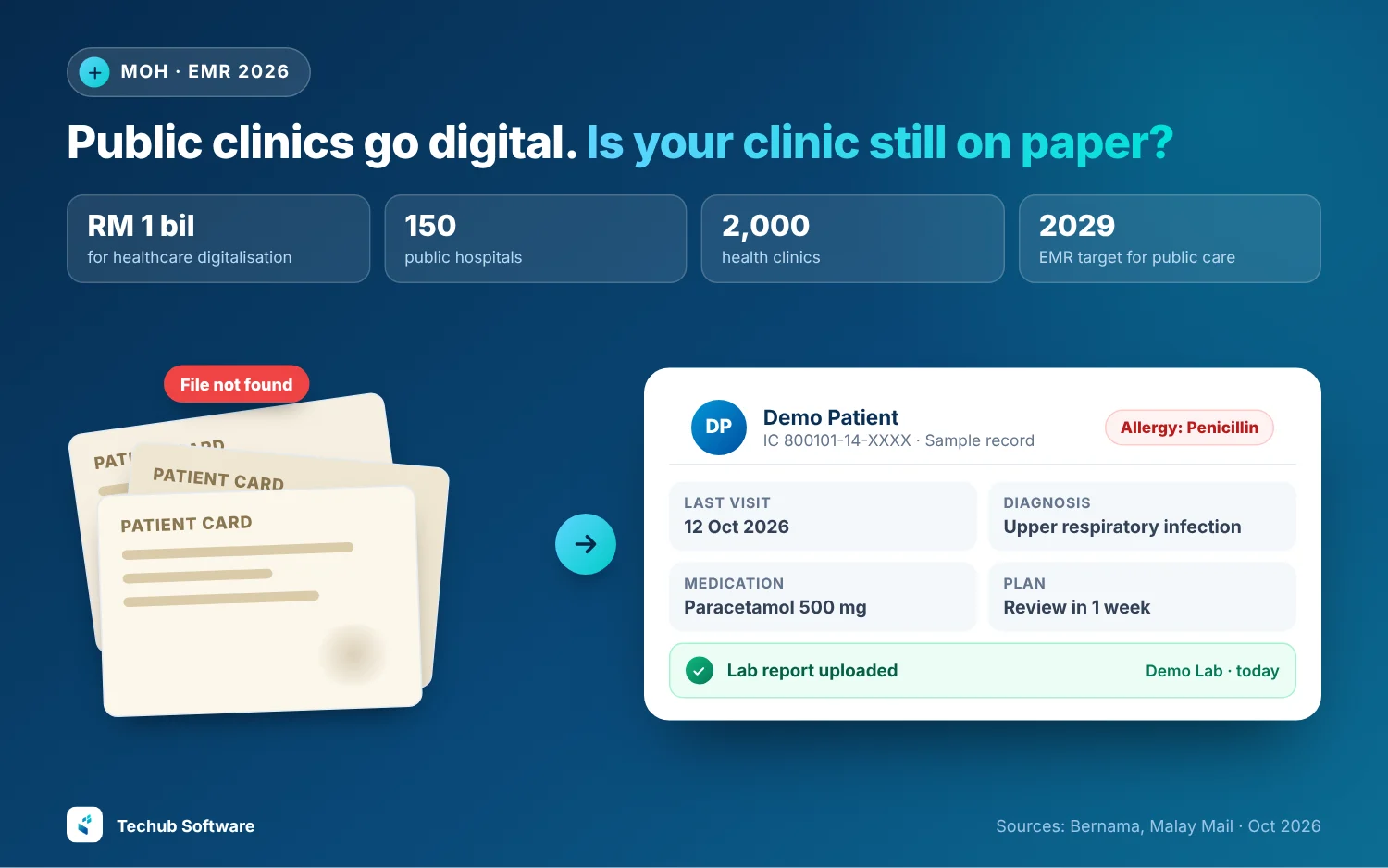
The Health Ministry is spending RM 1 billion to put 150 public hospitals and 2,000 health clinics on electronic medical records (EMR), with the faster rollout starting 1 September 2026. The money is for government facilities, but it raises the bar for every clinic: patients who see their records go digital at a government clinic will expect the same from a private one.
This guide is for private GP, dental, specialist and aesthetic clinic owners. It explains what was announced, why paper files cause real problems, and how to move your clinic to digital records step by step. It is general information as at October 2026.
What did the government announce?
| Date | Announcement |
|---|---|
| November 2025 | MOH targets EMR in all 150 public hospitals and more than 3,000 primary healthcare facilities by 2029 |
| 30 to 31 August 2026 | An extra RM 350 million brings healthcare digitalisation funding to RM 1 billion |
| 1 September 2026 | Faster EMR rollout starts, covering 150 hospitals and 2,000 health clinics, plus better internet at public facilities |
Health Minister Datuk Seri Dr Dzulkefly Ahmad said the funding should cut waiting times, ease congestion and improve the patient experience. The long-term goal is a Lifetime Health Record, so a patient's history follows them from clinic to clinic instead of staying in one file room.
Why are paper files still a problem?
A Malay Mail report on 11 October 2026 shared what patients at public facilities still go through with paper:
- An appointment book damaged by water, with a surgery booking that depended on a paper slip
- A file about an inch thick that went missing, so the doctor had to rebuild the treatment history
- A biopsy report misplaced for several days
- A two-hour wait while a nurse looked for a file
The same risks exist in any private clinic that keeps cards in a cabinet. A lost card means a missed allergy, a repeated test or an unhappy patient.
Do private clinics have to switch to EMR?
The RM 1 billion and the 2029 target are for public hospitals and clinics. The announcements do not set a new rule for private clinics.
Still, we expect private clinics to feel the change:
- Patients will compare. Once government clinics call numbers, send reminders and keep digital records, a paper card at a private clinic will feel slow.
- Patient data carries more duty. Health information is sensitive personal data under the Personal Data Protection Act 2010. Since 1 June 2025, data controllers must notify the Personal Data Protection Commissioner of a data breach. Paper files are hard to lock down, back up or check.
- Records will need to travel. A Lifetime Health Record works best when clinics can share clean, complete records, not handwriting.
Paper files vs digital records
| Paper files | Digital patient records | |
|---|---|---|
| Finding a patient's history | Search the cabinet | Search by name, IC or phone in seconds |
| Allergies and medication | Easy to miss on page 12 | Shown on screen, with alerts |
| Lab and hospital reports | Stapled in, sometimes lost | Uploaded and kept with the patient |
| Water, fire, lost files | History gone | Backed up |
| Who opened a record | Unknown | Every staff action is recorded |
5 steps to move your clinic off paper
- Start with every new visit. From day one, register and record each visit in the system. No more new paper cards.
- Scan the IC at registration. It fills in name, IC number and address without typing errors.
- Bring in your active patients first. Enter or import the patients who visit often. Old cards for patients who rarely come can wait.
- Upload old lab and hospital reports. Photos or scans go into each patient's record, so nothing is stapled and lost.
- Train staff, then lock the old cabinet. Keep old files stored safely for reference while everyone gets used to the new way.
If your patient list is already in Excel, PDF or an old system, our data migration service can bring it across for you.
How Techub's clinic system helps
Techub's Clinic Management System is built for GP, dental, specialist and aesthetic clinics:
- IC scan registration, so new patients are added in seconds
- Diagnosis and treatment plan history for every patient
- Medication report with allergy alerts
- Upload any lab, hospital or specialist report into the patient's record
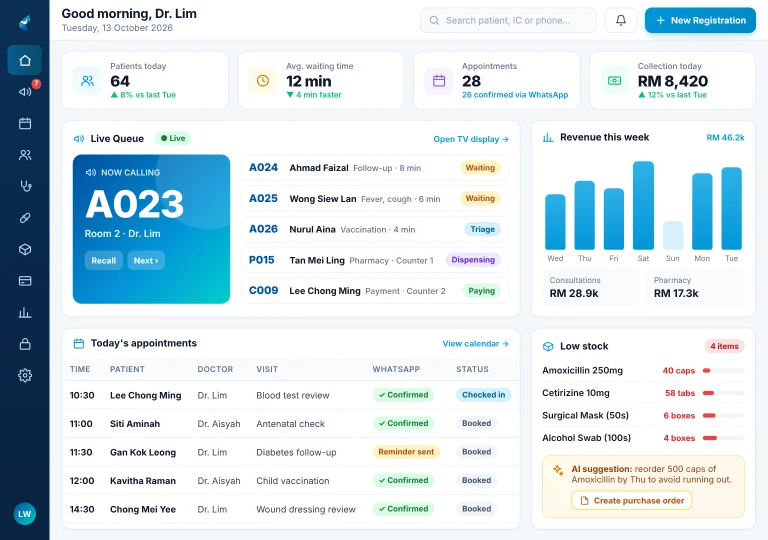
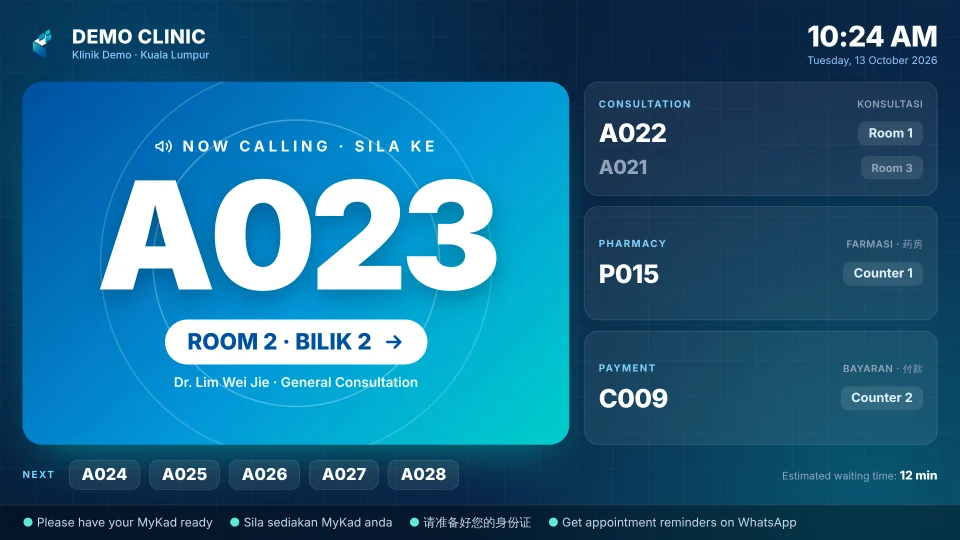
- Queue number calling and WhatsApp appointment reminders
- Staff activity tracking and permissions, so you decide who can view or edit records
Plans start from RM 99/month per outlet with our Welcome offer (12 months plus 2 months free, only RM 84.86 a month on average) for the first 250 users until 31 Dec 2026, or RM 178 month by month, and new users get the first 3 months free, including installation and staff training. See pricing for details.
For what to check before you buy, read our guide on how to choose a clinic management system.
Sources: Bernama, Malay Mail, DFDL.
Questions people ask
How much is Malaysia spending on EMR for public healthcare?
RM 1 billion. An extra RM 350 million announced on 31 August 2026 brought healthcare digitalisation funding to RM 1 billion, covering 150 hospitals and 2,000 health clinics, with a faster rollout from 1 September 2026.
Must private clinics in Malaysia use EMR?
The RM 1 billion and the 2029 EMR target are for public hospitals and clinics, and no new rule for private clinics was announced with them. But patient data is sensitive personal data under the PDPA, and patients increasingly expect digital records, so many private clinics are moving off paper now.
How does a clinic move from paper files to digital records?
Start recording every new visit in the system, scan ICs at registration, bring in active patients first, upload old lab and hospital reports, then train staff and store the old files safely. An existing Excel or PDF patient list can be imported.
See it running in your business
Ready to move your clinic off paper files? Book a free demo with us on WhatsApp.
From RM 99/month per outlet · 3 months free